

2026/27 PSO Rules Updates Now In Effect

All Rules Updates are Effective September 1, 2026
Judging Criteria Changes - Accepted
-
The Sensual and After Dark categories element "Clarity of Concept" (25 points) will be changed to "Sensual Energy" (25 points). The defintion of Sensual Energy:
-
Body language conveys sensuality/passion/flirtatiousness
-
Facial expressions match the body language/energy of the routine
-
Movement and trick choices exhibit understanding of sensual energy, as well as the category description
-
-
Virtual events only - Stage Etiquette - Acknowledgment of the audience at the end of the routine is no longer applicable, given the medium of video is different from performing in front of a live audience. Stage Etiquette will remain as an element, but the definition will be updated to remove the requirement for acknowledgement of the audience at the end of the routine.
Proposed Process Changes - Accepted
-
When someone is added to a division after the schedule is posted, we will shuffle the performance order for that division to ensure randomness.
Level Rule Changes - Accepted
-
A dismount through a flag grip where the competitor is not holding an ayesha is currently a deduction for Levels 2 and 3. For the upcoming season,
-
We are leaving it as a deduction for Level 2.
-
We are removing it as a deduction for Level 3.
-
An arch back in a stargazer, where the competitor’s shoulders or head are below the hips is currently a deduction. Next season, it is an exception for Level 1, and would not be a deduction.
Organization Updates: Things we’ve changed as we learn & grow (these are already in play)
-
Given recent industry events and conversations, we would like to reiterate that PSO believes that the industry owes its history to strippers and sex workers. We are also adding guidelines around responsible artistry to the Rules. Text at the end of this document.
-
Judges are now posted on the schedule around 30 days before an event; however, judges may be added or removed up to and during events due to staffing changes. If you want to report a conflict with a judge, you can check the list and let us know via email by the requested deadline. We will do our best to avoid placing judges on panels with reported conflicts.
-
We have added aerial (flying) pole and chains divisions to these 2026 events: Pacific & After Dark (Los Angeles), Northwest (Seattle), and Great Lakes (Chicago). In 2027, we will also be adding these at Atlantic & After Dark (Washington, D.C.). You can read more about these divisions here.
-
We are adding a PSO European Finals! Level 5 competitors from past events will be invited to compete. We will also have our usual days of amateur competition where you can sign up to compete. Stay tuned for more updates on this as we launch the 2026/27 season dates.
-
Name pronunciation guide - there were some requests for this in the most recent survey, and great news, we have had one for a few years now! This is a process for you to send in the pronunciation of your name for our team so they can say your name correctly during your opening announcement and closing thank you. The form is emailed out to competitors during the weeks leading up to the event and can also be found here.
Ethical Guidelines
Responsible Artistry
“You can sit with us” has been one of PSO’s core values from the start. We believe there is a place in the community for all of the dancers who want to participate. For this reason, we expect competitors with PSO to consider these guidelines for responsible artistry while creating their competition routines.
A responsible artist:
Is Thoughtful: Considers and carefully crafts the message that they want to send to the audience. Consider why you want to tell this story and what drives this message.
Seeks Clarity: Consults others with different viewpoints or backgrounds to ensure their message is clear. Seeks to learn from others to design the most effective message possible. This helps ensure you are telling the right story and identifying any unintentional messages that could harm others.
Is Original: Creates original work, or uses the work of others only with permission.
Takes Ownership: Accepting the praise, criticism, and/or discussion that can accompany your work.
Special thanks to Crystal Belcher for coining the term “responsible artistry.”
Censorship & Banned Subject Matter
Outside of limited circumstances, PSO does not support the censorship of performances. Whether a routine handles a difficult or challenging topic in good taste or with artistic validity is up to each individual spectator. PSO encourages you to act with artistic responsibility as you build your concept while also being respectful of the pole community and world at large.
PSO will not tolerate performances that contain content that is:
-
Racist, derogatory, or any form of demeaning or harmful representation of any race or ethnicity (including, but not limited to, blackface)
-
Homophobic, Transphobic, or discriminatory based on gender identity or sexual orientation
-
Whorephobic or encourages stigma against strippers and sex workers
-
Misogynistic or discriminatory based on gender
-
Body shaming, ableist, or discriminatory based on physical appearance or ability
-
Likely to incite or encourage harassment, hate speech, or violence against a group or individual based on their identity
If a performance is deemed to fall within one of the above categories by the judges, the Judge Wrangler, and/or the Admin on Call, the competitor will be disqualified. If the Admin Team is made aware of a breach of these guidelines after an event and determines that one has occurred, a competitor may be retroactively disqualified. Decisions made by the PSO Admin Team will be final.
Note: performances that address racism, homophobia, or discrimination against a group or individual based on identity are not banned but will be considered sensitive content.
Sensitive Content
Competitors often wish to create performances that can provoke strong emotional responses. While we do not ban performances related to the subjects listed below, we ask competitors to carefully consider how they approach creating routines that may be upsetting or triggering.
Examples of subject matter that may be considered sensitive:
-
Discussion of discrimination related, but not limited to, racism, sexism, homophobia, whorephobia, and other prejudices
-
Mental health, self-harming behavior, or suicide
-
Sexual assault
-
Disability
-
Abusive language, physical abuse, or torture
-
Eating disorders
-
Violence, including domestic violence
-
Murder or physical assault
-
Drug, alcohol, or substance abuse
-
Political statements
-
Use of religious or cultural artifacts
-
Use of satire or parody to make a statement
Cultural Appropriation
Merriam-Webster defines cultural appropriation as: “The adoption of cultural elements (such as clothing, customs, or hairstyles) of a group (usually a minority culture) by members of another group (usually a dominant culture) in a way that is exploitative, disrespectful, or stereotypical.
PSO acknowledges that cultural appropriation has the potential to cause harm, even when no harm is intended. However, it is difficult for judges and staff to determine each competitor's cultural or ethnic background, and we believe the question itself may be inappropriate or offensive. In the same vein, it is often difficult for judges and staff to definitively say a performance would be considered inappropriate or offensive to a member of another culture.
It is important for competitors to understand that if they create a routine that includes elements that could be considered culturally appropriated, they may cause harm or offense, which may affect how their performance is received by spectators and the broader public.
It is part of a competitor’s artistic responsibility to thoroughly research their concepts and present their performance with integrity and respect.
Content Warnings at PSO
The following statement will be added to the start of each PSO event.
PSO often contain performances that can provoke strong emotions and reactions. There may be performances that contain sensitive content or themes. The performances presented on stage do not represent the views of the PSO Team. We only ban specific, limited content and expect competitors to approach every performance with responsible artistry.
Competitors are optionally invited to add a content warning at the beginning of their music track if they feel that it is appropriate for their routine.
We are in the process of recording several short content warnings that competitors may download for free and then splice into their music files.
Competitors are also welcome to record their own content warnings and use those.


About Pole Sport Organization
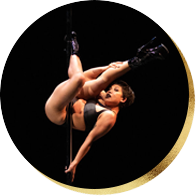
We believe that anyone, at any level, and any age should have a chance to be on stage. We are an inclusive event, meaning no submission videos, no prerequisites, and no required moves. Just sign up, and we'll see you at the show!